Choosing golf equipment is no longer a simple matter of buying the newest driver. It requires evidence, testing, and honest self-assessment. The National Golf Foundation reported 26.6 million on-course golfers in the United States during 2023. The R&A’s Golf Around the World report estimated more than 66 million golfers worldwide. That large participation base includes beginners, competitive players, older golfers, and occasional players. Their equipment needs cannot be identical.
A practical guide to how to choose the right golf equipment should begin with measurable performance. A qualified fitter can compare clubhead speed, launch angle, spin rate, carry distance, and dispersion. Those numbers reveal more than a salesperson’s enthusiasm. A driver that adds five yards may still create wider misses. A heavier shaft may feel stable for one golfer, but exhausting for another. Small details matter.
Independent testing also deserves attention. Golf Datatech’s retail tracking shows the strength of the equipment market, yet sales popularity does not prove personal suitability. That is an important distinction. I have seen golfers choose expensive clubs after one impressive simulator shot. Sometimes, that choice works. Often, it ignores fatigue, course conditions, and inconsistent contact. A reliable process includes a fitting, several swings, outdoor validation, and a clear return policy. Budget should remain part of performance analysis. The best equipment is not always the most advanced. It is the equipment that produces repeatable shots, practical confidence, and fewer costly compromises. Still, no fitting can replace practice. That truth is easy to overlook.
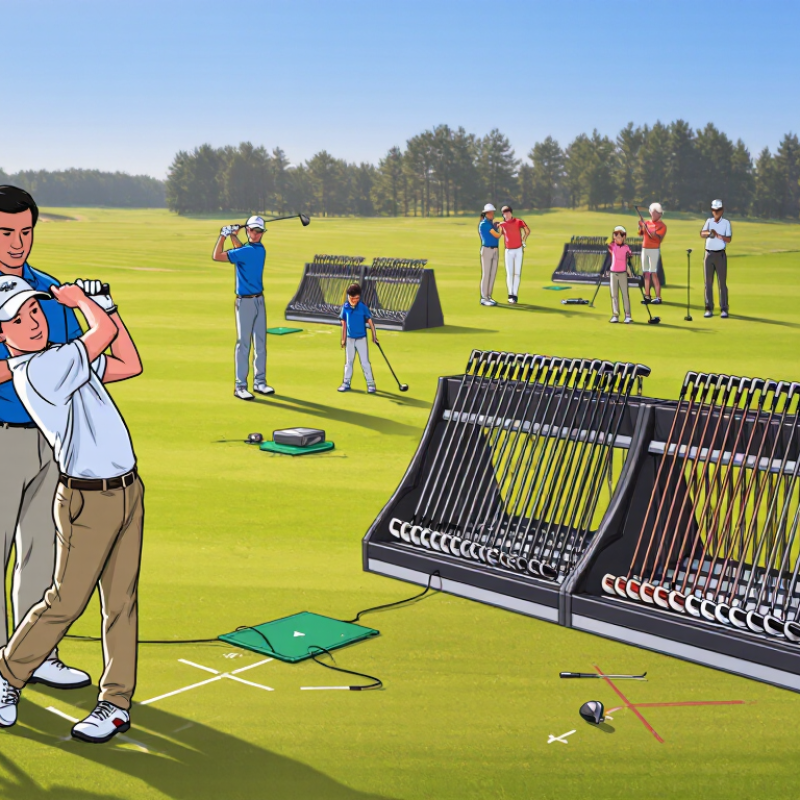
Measure before you buy. Swing speed gives a practical starting point for shaft flex, loft, and ball selection. A launch-monitor session should record driver speed, carry distance, launch angle, and spin. Do not trust one rushed swing. Take at least ten controlled shots.
The 2023 Distance Report from golf’s governing bodies found that average driving distance has continued to rise across major playing groups. That trend does not mean every golfer needs stronger equipment. A moderate-speed player may lose accuracy with a low-lofted driver or an overly stiff shaft. I once chose equipment by distance alone. The result looked impressive on a simulator but felt tiring after twelve holes. That was a useful mistake.
Your handicap adds essential context. A lower handicap often reflects repeatable contact, while a higher handicap may need forgiveness and predictable misses. The World Handicap System encourages scores from 18-hole rounds, so review your recent scoring pattern rather than one personal best.
Record your average score, penalty strokes, lost balls, and greens missed. The National Golf Foundation’s participation research shows that recreational golfers play varied amounts throughout the year, so an occasional golfer should not copy a tour player’s setup.
Compare three complete rounds, not one lucky afternoon. A 102 with fewer penalties may reveal better equipment needs than a 94 filled with risky recoveries. Performance data helps, but comfort still deserves a vote.
Choosing golf equipment begins with the rules, not the marketing claims. The USGA Equipment Rules permit a maximum of 14 clubs during a stipulated round. They also limit driver head volume to 460 cm³, roughly the size of a large grapefruit. These limits matter because a larger head may offer confidence, but it cannot legally exceed the volume cap in tournament play. Check the manufacturer’s technical specification, not only the club’s appearance.
Fit the legal space around your actual shots. A driver with a 460 cm³ head can help on off-center impacts, yet shaft length, loft, and face angle still influence launch and accuracy. The USGA and R&A Distance Insights Report found average driving distance increased by about 20 yards from 1996 to 2019. More distance has changed gapping needs. A seven-degree gap between clubs may leave an awkward 15-yard hole. That is not a small problem.
Use a launch monitor and record carry distances, dispersion, and strike location. The National Golf Foundation reported 26.6 million U.S. on-course golfers in 2023, so equipment fitting serves a wide range of abilities. Still, averages can mislead.
My own fitting experience suggests players often choose a powerful driver before checking their shortest wedge. Count the 14-club limit carefully. Leave room for recovery shots, not just perfect swings. Fitness, budget, and playing conditions should shape the final setup.
Choosing a driver should begin with measured ball flight, not a shelf label or online opinion. A launch monitor can reveal ball speed, launch angle, spin rate, carry distance, and strike location. These numbers explain performance more clearly than distance alone.
Driver loft should support your launch conditions. Too little loft may produce a flat flight, low carry, and unstable contact. Excessive loft can increase spin and reduce total distance. However, a golfer’s delivered loft matters more than the number printed on the club. Swing path, attack angle, and impact position all change the result.
Shaft fitting also requires more than selecting regular, stiff, or extra stiff. Weight, length, torque, and bend profile affect timing and face control. A qualified fitter should compare several options while recording ball speed and dispersion. The best shaft is not always the longest one. Consistent center contact may matter more.
I once favored a lighter shaft because it produced my fastest single swing. That choice was imperfect. My average contact moved toward the heel, and dispersion widened. A heavier option reduced peak speed slightly but improved carry consistency. I still question that decision on windy days.
Test outdoors when possible. Indoor numbers can feel convincing, yet visual feedback and wind exposure may change your delivery. Use repeated swings, not one impressive shot, before adjusting loft or shaft. Some data needs patience.
What Is the Best Way to Choose Golf Equipment?
Build Iron-to-Wedge Gapping Around 4–6° Loft Intervals
Choosing irons and wedges should begin with distance gaps, not appearance or marketing claims. A practical fitting starts by recording each club’s loft, carry distance, launch, and descent angle. For most players, 4–6° between irons creates a useful progression. This range is only a starting point. Modern iron designs may produce unexpected distance overlaps.
Check carry distances, not total distances. Hit ten controlled shots with each club, then remove obvious mishits. If a 7-iron carries 145 yards and an 8-iron carries 132, the 13-yard gap may be suitable. A wedge system needs the same attention. Your pitching wedge, gap wedge, sand wedge, and lob wedge should produce distinct yardages. Avoid choosing lofts by tradition alone. Your swing may expose a missing number.
Tips: Map your carry gaps on a launch monitor or a quiet practice range. Keep the same ball and swing effort. If two clubs finish within five yards, adjust loft or replace one club. Also check bounce and sole design, especially on wedges. Loft changes can alter turf interaction, and that detail is easy to overlook. A 5° interval worked well in one fitting, but it may not suit every player. Recheck the numbers after several rounds.
A practical reference setup for creating consistent distance gaps from the long irons through the wedges. Loft intervals are a starting point; actual yardage should be confirmed with launch-monitor testing and on-course performance.
| Club | Loft | Loft Gap from Previous Club | Estimated Carry Distance | Primary Role | Typical Ball Flight | Fitting Consideration |
|---|---|---|---|---|---|---|
| 4-Iron | 22° | — | 185 yd / 169 m | Long approach shots and controlled tee shots | Lower launch, penetrating flight | Replace with a hybrid if launch, carry, or stopping power is inconsistent. |
| 5-Iron | 26° | 4° | 175 yd / 160 m | Long approach shots from the fairway | Mid-low launch | Aim for a measurable distance gap rather than matching loft alone. |
| 6-Iron | 30° | 4° | 165 yd / 151 m | Versatile mid-long approach club | Mid launch with moderate stopping power | Check that the club produces enough peak height to hold the green. |
| 7-Iron | 34° | 4° | 155 yd / 142 m | Reference club for distance gapping | Mid-high launch | Use a consistent 7-iron carry as a baseline for evaluating the rest of the set. |
| 8-Iron | 38° | 4° | 145 yd / 133 m | Approach shots requiring accuracy | High, predictable flight | Verify that the carry gap remains useful when swinging at normal speed. |
| 9-Iron | 42° | 4° | 135 yd / 123 m | Scoring approach shots | High launch with increased spin | Compare spin and descent angle, not just total distance. |
| Pitching Wedge | 46° | 4° | 125 yd / 114 m | Full-swing approach and longer pitch shots | High launch and controlled spin | Confirm whether the pitching wedge belongs to the iron set or the specialty-wedge progression. |
| Gap Wedge | 51° | 5° | 112 yd / 102 m | Bridges the distance between pitching and sand wedges | High, controlled flight | Especially valuable when the pitching wedge and sand wedge leave a large yardage gap. |
| Sand Wedge | 56° | 5° | 98 yd / 90 m | Bunker shots, pitches, and standard wedge approaches | High launch with substantial spin | Choose bounce to match turf conditions, bunker texture, and delivery pattern. |
| Lob Wedge | 60° | 4° | 84 yd / 77 m | Short-sided shots and high-soft approaches | Very high launch and steep descent | Add it only if it creates useful scoring options without removing a needed long club. |
Distance figures are planning estimates for a moderate-speed golfer using centered strikes in calm conditions. Individual carry distances vary with swing speed, delivery, strike quality, shaft, ball, temperature, wind, and club design. A practical target is usually a repeatable 10–15 yard carry separation between adjacent clubs, with no overlapping full-swing yardages.
Choosing golf equipment should begin with measured performance, not appearance or launch claims. The USGA and R&A Distance Insights Report showed average amateur driving distance changed by roughly one yard from 2022 to 2023. That small movement matters. A longer club is not automatically better if carry gaps become unreliable.
During a fitting, test each club with the same ball and launch-monitor settings. Record carry distance, not total distance. Then examine dispersion, especially the left-to-right range. I prefer median carry and the widest 80 percent pattern. One perfect shot can hide a poor fit.
Test strikes near the center, toe, and heel. Driver MOI measures resistance to twisting, and equipment rules place driver MOI near 5,900 g·cm². Higher stability can protect direction on mishits, but it cannot repair an unsuitable shaft or poor delivery. My first fitting mistake was trusting the longest shot. I ignored the seven ordinary ones.
Tips: Bring your current set. Hit ten shots per club. Compare the median carry, front-to-back gaps, and dispersion width. For irons, seek useful distance gaps of about 10–15 yards. If a club produces impressive numbers but inconsistent contact, question the result. A launch monitor report is evidence, not a verdict. Test again when fatigue appears. Real golf rarely feels perfect.
Measure driver speed, carry distance, launch angle, and spin. Take at least ten controlled shots. One rushed swing misleads. These numbers help guide shaft flex, loft, and ball selection.
No. Moderate-speed players may lose accuracy with low loft or overly stiff shafts. More distance is not automatically better. I once chased simulator distance and felt exhausted after twelve holes.
A lower handicap often shows repeatable contact. A higher handicap may benefit from forgiveness and predictable misses. Consider your usual mistakes, not your best shot. That choice may feel less exciting but work better.
Review at least three complete 18-hole rounds. Record average score, penalty strokes, lost balls, and greens missed. A score of 102 with fewer penalties may reveal better needs than a risky 94.
The standard limit is 14 clubs. Count them carefully before playing. Leave room for recovery shots, not only perfect swings. A crowded bag can hide unnecessary overlap.
The maximum driver head volume is 460 cm³. A larger head may build confidence, but it cannot exceed the limit in regulated play. Check the technical specification, not appearance alone.
Start with roughly 4–6° loft intervals. Then test actual carry distances. Ten controlled shots per club can reveal overlaps. If two clubs finish within five yards, adjust loft or replace one.
Measure carry distance first. Roll varies with turf, weather, and landing angle. Use the same ball and similar swing effort. A quiet practice area helps. My earlier fitting focused too much on total distance.
Check bounce and sole design. These features affect turf interaction, especially on different ground conditions. A five-degree interval worked well once, but it may not suit everyone.
They matter as much as launch data. A technically suitable club may still feel tiring or awkward. Recheck your numbers after several rounds. Data helps, but it does not make every decision.
Choosing golf equipment effectively starts with understanding your own game. Before buying, measure swing speed, handicap, and typical 18-hole scores to identify your skill level and performance needs. Follow the USGA 14-club limit and the 460 cm³ driver volume cap when planning your set. The goal is not to collect the most clubs, but to select tools that provide reliable distance, control, and confidence.
To learn how to choose the right golf equipment, use launch, spin, and ball-speed data to match driver loft and shaft characteristics to your swing. Build iron-to-wedge gapping with consistent loft intervals of about 4–6 degrees so each club has a clear purpose. Finally, validate the complete set by comparing carry distance, shot dispersion, and moment-of-inertia performance. Testing these factors helps ensure that every club contributes to a balanced and practical setup.

Clyde Golf