Buying golf equipment can feel straightforward under bright shop lights, yet a club that looks impressive may not suit your swing. The question “what factors should be considered when buying golf equipment” deserves more than a quick glance at price or brand. Your skill level, typical course conditions, practice habits, and physical comfort all affect which clubs and accessories make sense. Fit matters. A driver with the wrong shaft flex or length may feel awkward and make consistent contact harder. A qualified club fitter can assess your swing and explain measurements, but fitting advice should still match your budget and goals.
Start with the clubs you use most. Notice whether your irons launch comfortably, your putter feels balanced, and your golf bag stays manageable during a full round. Small details count. Check grip size, club condition, return policies, and whether replacement parts are readily available. Golf balls also vary in feel and performance, so testing a few models can be more useful than trusting packaging claims. If you are considering used equipment, inspect the grooves, shafts, grips, and signs of damage before buying. Avoid paying extra for features you cannot explain or use. It is easy to assume newer means better; sometimes, a familiar club that fits well is the smarter choice. The sections ahead explore these practical factors, helping you compare equipment with care while leaving room to reassess as your game changes.
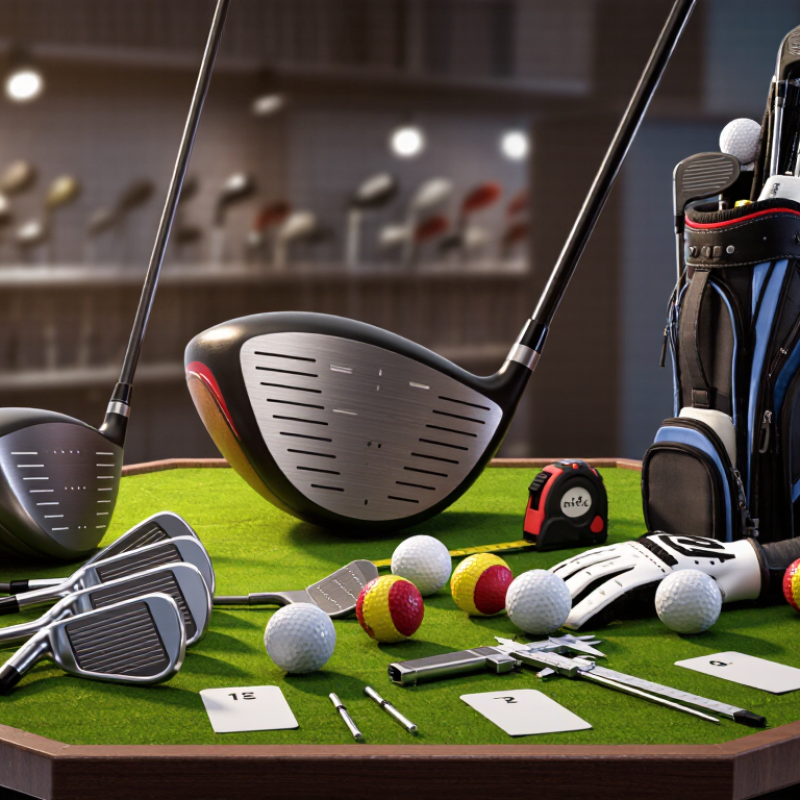
Your skill level should shape the clubs you buy, not the skill level you hope to have next year. A beginner who often misses the center of the face may benefit more from forgiving, easy-to-launch clubs than from equipment designed for precise shot shaping. If you already strike the ball consistently, fitting for shaft length, flex, and lie angle can help match clubs to your swing. Small mismatches matter. A club that feels impressive in a shop may feel very different on a wet fairway.
Your goals matter just as much. The National Golf Foundation’s 2024 Golf Industry Report counted 26.6 million U.S. on-course golfers in 2023, plus 45 million participants when off-course formats were included. That range reflects different ways to play—and different equipment needs. Someone practicing at a range may prioritize a few reliable clubs; a golfer preparing for regular rounds may need a complete, rule-compliant set. Be honest about how often you play. Buying for an imagined future routine can waste money. Before choosing, note your usual miss, typical course, and practice habits, then test suitable options when possible. A basic fitting or advice from a qualified golf professional can clarify what actually helps. I’d reconsider any purchase that promises to fix every flaw.
Set your budget before comparing clubs. A useful starting point is to separate essential equipment from optional upgrades. Essentials usually include a legal set of clubs, balls, tees, a glove, and a bag. Shoes may matter too, especially if you walk the course. Keep a small reserve for replacement balls and basic repairs. Costs vary widely, so check local secondhand options and fitting services before spending your full limit. A low price is not always a bargain if the clubs do not suit your swing.
Participation data can help explain why a practical budget matters. The National Golf Foundation’s 2024 report counted 26.6 million American on-course golfers in 2023, alongside millions more using off-course golf facilities. That is a large range of playing habits, not one standard equipment need. New players may start with fewer clubs and add pieces as their preferences become clearer. Set a firm ceiling. Then compare the cost of a complete beginner set with the cost of buying clubs individually. The cheaper route can change by season and condition. I would not assume the first budget is perfect; leave room to revise it after a few rounds. A shiny upgrade can wait. Focus on equipment that feels comfortable, fits your playing plans, and leaves money for actually getting onto the course.
| Equipment | Typical Budget (USD) | Budget Priority | Practical Buying Guidance |
|---|---|---|---|
| Golf club set | $250–$600 for a new beginner set; about $150–$350 for a used set | High | Start with a suitable set rather than buying every club separately. Used clubs can reduce the initial cost; check that the grips and club faces are in usable condition. |
| Golf bag | $50–$150 | Medium | A basic carry or stand bag is usually sufficient. Choose a cart bag only if you expect to use a golf cart regularly. |
| Golf balls | $20–$45 for a starter supply | High | New golfers may lose balls while learning, so budget-friendly balls are a sensible choice. Avoid paying extra for features you are not yet able to evaluate. |
| Golf shoes | $60–$120 | Medium | Prioritize a comfortable fit and adequate grip. Some courses allow athletic shoes, but check the course’s footwear rules before playing. |
| Golf glove | $10–$25 | Low to medium | A glove is commonly worn on the lead hand and can improve grip comfort. One glove is enough to begin. |
| Tees and basic accessories | $5–$20 | Low | Tees, a ball marker, and a divot-repair tool are inexpensive basics. Some courses provide or sell these items, but bringing your own is convenient. |
| Optional: golf towel | $8–$20 | Optional | A towel helps keep hands and club faces clean, but it can be added later if you want to keep the initial budget low. |
| Estimated essential-equipment total | $395–$960 with a new beginner club set | Plan a small contingency | Prices vary by condition, retailer, and location. Set aside roughly 10% for taxes or replacement items, and prioritize clubs, balls, and comfortable footwear. |
Drivers, irons, wedges, putters, balls, and bags solve different problems, so compare them by use, not appearance. A driver’s loft and shaft flex affect launch and control; a forgiving head can help on off-center hits. Irons vary in sole width and cavity design, while wedges need suitable loft gaps for short shots. Putters deserve a real test: check alignment, length, and feel on a practice green. Small details matter.
The National Golf Foundation’s 2024 report counted 26.6 million U.S. on-course golfers in 2023, a varied group with different skill levels and needs. That figure is not a buying guide, but it cautions against treating one setup as right for everyone. Compare ball compression and cover feel, too; a ball that spins well around the green may not suit every swing. Check grip size, shoe traction, and bag weight in person. Carry the bag for a few minutes. It can feel heavier later. A launch monitor or qualified fitting can reveal useful differences in shaft length, lie angle, and ball flight, though numbers do not replace comfort. I would question any purchase based on one impressive shot; conditions and swing changes can distort the result. Decide which feature solves a problem you actually notice.
A club can look right and still fight your swing. Check your height, wrist-to-floor measurement, and posture before choosing shaft length. Then test lie angle: the sole should sit evenly at impact, not point sharply toward the heel or toe. Grip size matters, too. If your fingers dig into your palm, the grip may be too small; if they barely meet, it may be too large. Small mismatches matter. A fitting session is useful, but one indoor swing is not a perfect answer. Test outdoors, where uneven lies and real contact reveal more.
Check compatibility across the whole set. Compare loft gaps between irons and wedges, and make sure the shaft feels consistent through the clubs you use most. Confirm that your ball meets the course’s equipment requirements. The USGA and R&A Equipment Rules specify a minimum golf-ball diameter of 1.680 inches and a maximum weight of 1.620 ounces. Their rules also cap most club lengths at 48 inches, with an exception for putters. Those standards do not tell you what fits your swing; they define equipment limits. Bring your current clubs to a fitting, note your usual miss, and compare results with the same ball. A launch monitor can help, but feel still counts.
Check fit, sizing, and compatibility before choosing your clubs.
How to use this chart: These are approximate stock adult men's club lengths; actual lengths vary by model and set. Use them as a reference, not a fitting prescription. Your height, wrist-to-floor measurement, posture, and comfort can affect the right length. Also check that shafts, grips, and any adjustable components are compatible with the clubhead.
When buying golf equipment, inspect more than the finish. Check whether the shaft, grip, and clubhead suit your swing and feel comfortable after repeated swings. Ask about adjustment options, warranty coverage, and what the warranty excludes. A clean-looking club can still be the wrong fit. Feel matters.
Testing should resemble your real game. Hit several shots with the same ball type, note strike quality, launch, and dispersion, then compare results across clubs. One flushed shot proves little. The National Golf Foundation’s 2024 participation report counted 26.6 million U.S. on-course golfers in 2023, a reminder that players’ needs vary widely. Ask whether you can test on a range or course, and whether fitting measurements are included in the price. Keep records. I would not trust a test based on one rushed session; fatigue and nerves can distort results.
After-sale support matters when a grip loosens or a fitting needs adjustment. Before paying, ask how repairs are handled, who pays shipping, and how long service usually takes. PwC’s 2018 customer-experience report found that 32% of consumers would stop doing business with a company after one bad experience. That is not golf-specific, but it underlines why clear support terms matter. Save your receipt and fitting notes, even if the process feels overly cautious.
Beginners who often miss the center may benefit from forgiving clubs that launch easily. Consistent ball strikers can consider shaft length, flex, and lie angle. Your swing matters more than your hoped-for future swing.
Not always. Range players may need only a few dependable clubs, while regular golfers may prefer a complete, course-compliant set. Add clubs as your habits become clearer.
List essentials such as clubs, balls, tees, a glove, and a bag. Shoes can help, especially when walking. Keep some money aside for replacement balls and repairs.
It can be, but inspect the grips, shafts, and clubheads before buying. A low price is no bargain if the clubs feel wrong. Compare local options carefully.
Hit several shots with the same type of ball. Note your contact, launch, and shot spread across multiple clubs. One perfect shot proves little.
A basic fitting can help match club length, shaft flex, and lie angle to your swing. Ask what the service includes and whether measurements cost extra. I might still need time to adjust.
Ask how repairs work, who pays shipping, and how long service usually takes. Check warranty coverage and exclusions before paying. Keep your receipt and fitting notes.
There is no fixed number. Play a few rounds and notice which clubs feel comfortable and which cause trouble. A shiny upgrade can wait. Your first budget may need revising.
Choosing the right golf equipment starts with an honest assessment of your skill level and golfing goals. A beginner may benefit from forgiving, easy-to-use clubs, while a more experienced player may prefer equipment that offers greater control. Consider how often you play and what you hope to improve, then set a realistic budget that covers essential items without focusing on price alone. Comparing equipment types and key features can help you understand the trade-offs between comfort, performance, durability, and ease of use.
Before buying, check that clubs and other gear fit your size, playing style, and existing equipment. Whenever possible, try items out to see how they feel and perform. Also evaluate product quality, available testing options, return policies, warranties, and after-sale support. Thinking through what factors should be considered when buying golf equipment can help you make a practical choice that suits your needs now and continues to support your progress on the course.

Clyde Golf